In a world where most photographs stay on smartphones and social media, printing your favorite images gives them a lasting place in your home. Choosing the right photo print sizes can make a major difference in how your images look, whether you are creating a family album, displaying portraits, decorating a wall, or working withprofessional photo services to build high-quality prints. From compact 4×6 prints to large 30×40 wall displays, every size works best for multiple purposes
Why Choosing the Right Photo Print Size Matters
A photograph can look entirely different depending on its printed dimensions. A small print might be perfect for an album, while a large wall print can turn an elegant landscape or portrait into an appealing focal point.
Before ordering a print, consider the image’s composition, resolution, aspect ratio, available display space, and the purpose of the photograph. A well-composed image captured via professional portrait services can look excellent at several sizes, but choosing the incorrect dimensions might lead to unnecessary cropping or a print that does not fit its surroundings.
Common Photo Print Sizes and Their Best Uses
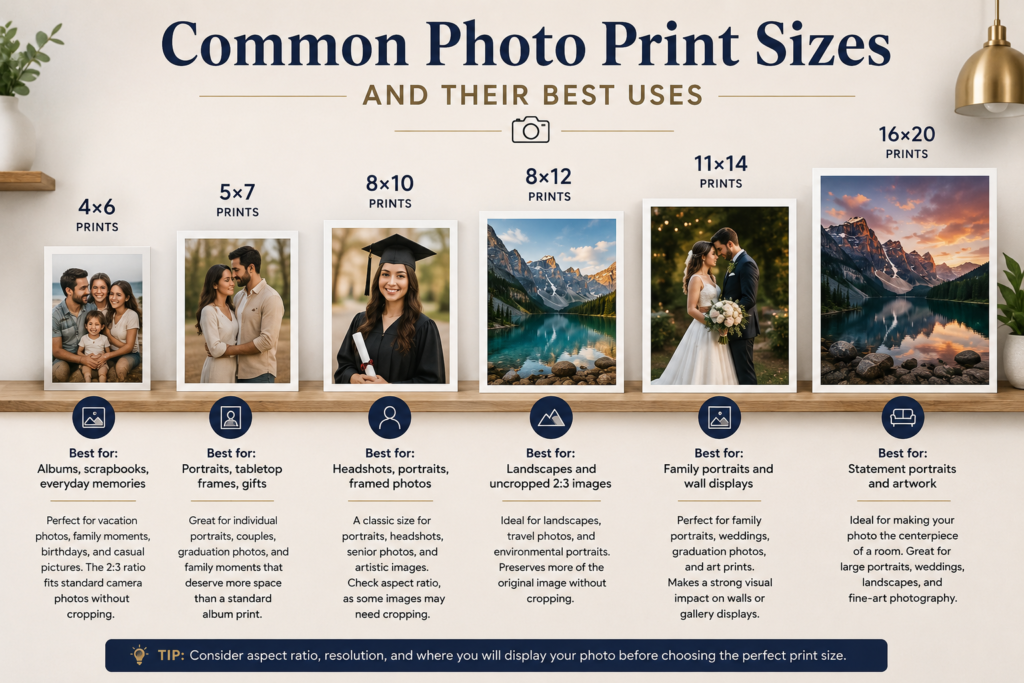
4×6 Prints
The 4×6-inch print is one of the most popular choices for everyday photographs. Its compact dimensions make it perfect for conventional photo albums, scrapbooks, memory boxes, and personal collections.
This size works especially well for vacation snapshots, family moments, birthday celebrations, and casual photographs. As 4×6 has a 2:3 aspect ratio, many photographs from standard digital cameras can be printed without significant cropping.
5×7 Prints
A 5×7-inch print gives more space for in-depth detail while remaining small enough for desks, shelves, bedside tables, and smaller frames.
It is a specifically best option for individual portraits, couples’ photographs, graduation pictures, and family moments that deserve more consideration than a standard album print.
8×10 Prints
The 8×10-inch size is a classic choice for portraits and framed photographs. It gives enough surface area to display facial details clearly without taking over an entire wall.
Professional headshots, senior portraits, family photographs, and artistic images can all work well at this size. However, keep the image’s aspect ratio in mind, as some photographs may need cropping to fit an 8×10 frame.
8×12 Prints
For photographs captured with a 2:3 aspect ratio, an 8×12 print can be a perfect alternative to 8×10. It preserves more of the original image and reduces the need for cropping.
This size is especially useful for landscapes, travel photography, environmental portraits, and photographs where the surrounding composition is necessary.
11×14 Prints
An 11×14 print provides a noticeable step up in size and works beautifully for wall displays and larger framed portraits.
It is a popular choice for family portraits, wedding photographs, graduation images, and artistic photography. When displayed individually or as part of a gallery wall, this size can make a strong visual presence.
16×20 Prints
When you need an image to become a major feature of a room, 16×20 is an excellent choice. It provides ample space for photographs with firm composition and detail while keeping it manageable for most home interiors.
Large portraits, wedding images, landscapes, and fine-art photographs can all take advantage of this format. Make sure the original image has enough resolution before expanding it.
Large Photo Prints for Wall Art
Large prints can transform an ordinary wall into a personalized display. Sizes such as 20×24, 20×30, 24×36, and 30×40 inches are perfect for statement pieces when you have enough wall area.
Landscape photographs, dramatic portraits, architectural images, and travel photographs usually look impressive when enlarged. However, size must always be balanced with viewing distance. A very large photograph viewed from several feet away can make an immersive experience, while a smaller print is more appropriate for close viewing.
If you are interested in enhancing the quality and visual impact of your photographs before printing, understanding composition and lighting is necessary. Studying techniques like theportrait lighting patterns photographers should know can help you make portraits that remain visually strong even when enlarged
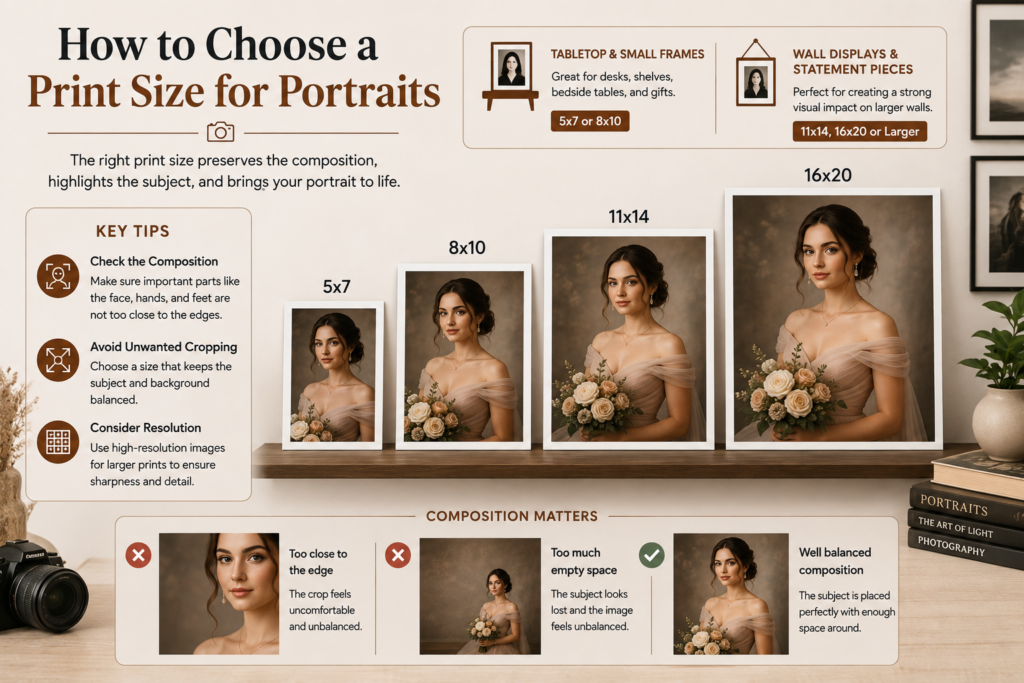
How to Choose a Print Size for Portraits
Portraits need careful consideration because cropping can impact the subject’s face, body position, and entire composition.
For a traditional portrait, 5×7 or 8×10 can work well for tabletop displays and tiny frames. If the portrait is intended to become wall art, 11×14, 16×20, or larger formats might give a more dramatic presentation.
Before printing, check where the subject is placed within the frame. Avoid choosing dimensions that cut off crucial parts of the photograph or eradicate visual areas that drive the composition.
Best Print Sizes for Wedding Photography
Wedding photographs are usually preserved for years, so selecting appropriate print dimensions can assists build a beautiful collection.
Small 4×6 prints are valuable for albums, guest displays, and collections of candid moments. Important portraits and ceremony photographs can be printed at 8×10 or 11×14, while a favorite couple’s portrait might deserve a larger 16×20 or 24×36 display.
For a wedding gallery wall, merging several sizes can build more visual interest than using identical prints throughout the arrangement.
Best Print Sizes for Landscape and Travel Photos
Landscape and travel photographs usually benefit from larger formats as they contain extensive details and broad compositions.
An 8×12 or 12×18 print can preserve a large scene without excessive cropping. For dramatic landscapes, 16×24, 20×30, or 24×36 can build an impressive wall display.
Before making a large print, inspect the photograph at full resolution. Details that look sharp on a phone might appear softer when enlarged significantly.
Understanding Aspect Ratio and Cropping
One of the most crucial stuff to consider before choosing a print is the photograph’s aspect ratio. The aspect ratio describes the relationship between the image’s width and height.
For example, a 4×6 photograph has a 2:3 ratio, while an 8×10 photograph has a 4:5 ratio. Because these proportions are different, an image built for 4×6 may lose part of its composition when printed at 8×10.
Always preview the crop before ordering. Pay particular attention to faces, hands, important objects, and subjects positioned close to the edges.
Resolution Matters for Large Prints
Print dimensions alone do not determine quality. Your photograph also requires enough resolution to support the selected size.
A high-resolution original generally gives greater flexibility for enlargements. Images that are heavily compressed, extremely small, or significantly cropped might display softness or pixelation when printed at large dimensions.
Learning the basics of camera techniques can also enhance your results from the beginning. If you need to grow your overall skills, thisguide to learning photography can let you build a firm foundation for building images worth printing.
Quick Photo Print Size Guide
Print Size
Best For
4×6
Albums, scrapbooks, everyday memories
5×7
Portraits, tabletop frames, gifts
8×10
Headshots, portraits, framed photos
8×12
Landscapes and uncropped 2:3 images
11×14
Family portraits and wall displays
16×20
Statement portraits and artwork
20×30
Large landscapes and wall art
24×36
Dramatic photography and statement pieces
30×40
Large professional artwork and exhibitions
FAQS - Photo Print Sizes
1. What are the most common photo print sizes?
The most common photo print sizes include 4×6, 5×7, 8×10, 11×14, and 16×20 inches. The best size depends on where you plan to display your photo and how much detail you want to show.
2. What photo print size is best for framing?
An 8×10 print is a popular choice for standard frames and portraits. For larger wall displays, 11×14 or 16×20 prints can create a more noticeable visual impact.
3. What is the best photo print size for a wall?
For smaller spaces, 8×10 or 11×14 prints work well. Larger spaces can accommodate 16×20, 20×30, or 24×36 prints, depending on the wall size and overall room layout.
4. How do I choose the right photo print size?
Consider the photo’s resolution, aspect ratio, composition, available display space, and intended use. Choosing a size that matches your image’s proportions can also help prevent unwanted cropping
5. Can I print any photo in any size?
Most photos can be printed in different sizes, but changing dimensions may require cropping. For large prints, make sure your original image has enough resolution to maintain sharp details and good quality.
Final Thoughts
The best photo print sizes depend on more than simply how large you want your photograph to appear. Consider the image’s composition, aspect ratio, resolution, viewing distance, frame, and intended location before making your choice.
For everyday memories, smaller formats such as 4×6 and 5×7 are practical and versatile. Portraits often work beautifully at 8×10 or 11×14, while landscapes, wedding highlights, and artistic photographs can make a stronger impression at 16×20 or larger.
Most importantly, choose a size that allows the photograph’s story and composition to shine. A thoughtfully printed photograph can become much more than an image—it can become a lasting part of your home, memories, and personal collection.